WEC Lines Launches Refrigerated Container Services in the Maghreb
WEC Lines recently announced its entry into the refrigerated container market with the introduction of 50 new 45-foot High-Cube Pallet-Wide refrigerated containers. This decision reinforces the company’s commitment to providing comprehensive transportation solutions to meet growing demand.
The transportation company highlights a steady increase in demand for refrigerated containers, particularly in the food, pharmaceutical, and healthcare sectors. This trend arises from the need to ensure reliable transport for temperature-sensitive goods.
Forecasts and Growth:
According to Drewry’s 2023 Reefer Shipping Forecaster, the transport of refrigerated containers is expected to experience an annual growth rate of 4% between 2023 and 2028. This growth is attributed to the resilience of the perishable goods trade in the face of economic slowdowns.
Features of the New Containers:
The new 45-foot refrigerated containers are equipped with state-of-the-art electric cooling systems, ensuring precise temperature control within a range of -30 ºC to +30 ºC. This guarantees the integrity of temperature-sensitive goods throughout transport.
Service Expansion:
Features of the New Containers:
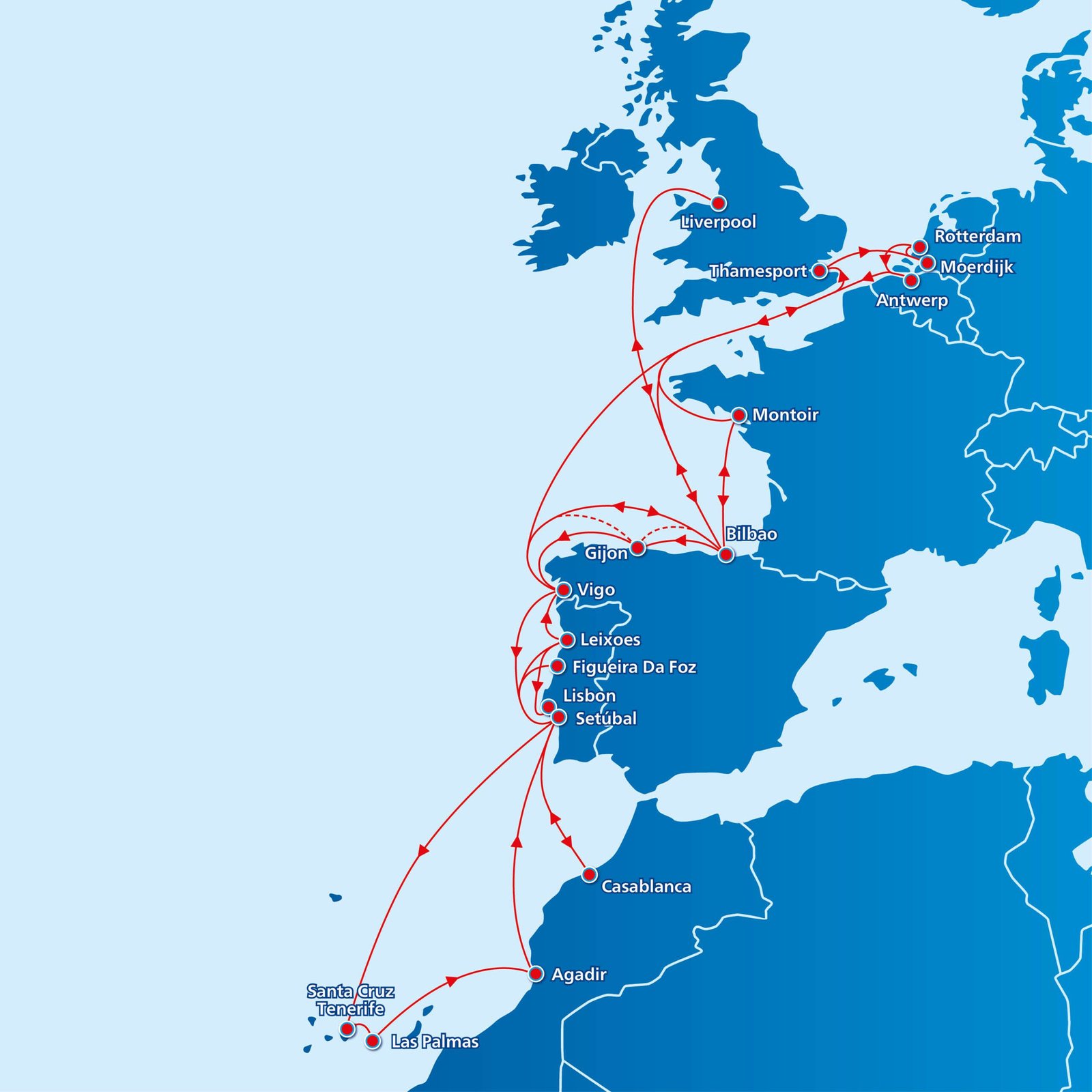
WEC Lines, committed to reducing its ecological footprint, has launched a new service connecting Agadir in Morocco to Portugal, Spain, and the United Kingdom. This service provides a fast and environmentally friendly alternative to road transport for importers of fresh products.
Response to Growing Demand:
“With this investment, WEC Lines is ready to meet the increasing demand for refrigerated freight in Europe,” stated Caesar Luikenaar, CEO of WEC Lines.
Environmental Commitment:
In line with its commitment to achieve a zero ecological footprint by 2050, WEC Lines equips all its refrigerated cargo with some of the most energy-efficient machines in the industry.
By integrating these new refrigerated containers into its fleet, WEC Lines is likely also expanding the use of refrigerated containers in its deep-sea operations.